Miembros

Representantes de las instituciones que organizan la red y sus seminarios.

Representantes

Presidente de LAFMAT

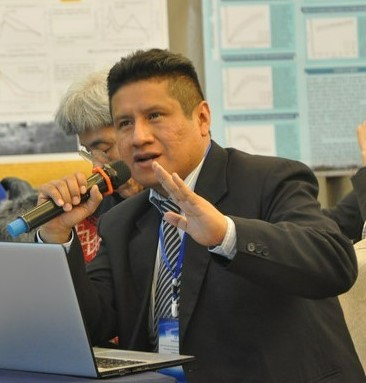
Luis De Los Santos Valladares

University of Cambridge

Leer biografía

Research Associate at the University of Cambridge (UK). Visiting Professor at the Federal University of Pernambuco (Brazil, 2024, 2025), Eurasian National University (Kazakhstan, 2026) and Northeastern University (China 2018-2021). Past Post-Doc position at the Tokyo Institute of Technology (2011). Founder of the Latinamerican Network on Matter Condensed Physics and Materials Science (www.lafmat.com). Specialist in the preparation, characterization and applications of functional materials, oxidation of metal surfaces and magnetic properties of oxides. Editor of Physica B (Science Direct), Heat Treatment and Surface Engineering (Taylor & Francis) and Journal of Superconductivity and Novel Magnetism (Springer). Reviewer of projects for the Czech Republic Science Foundation, National Council of Science (Poland) and CONACYT (Mexico). Organizer of five international conferences, among them LACSMAG, EBS, and ICAMP.
Brasil

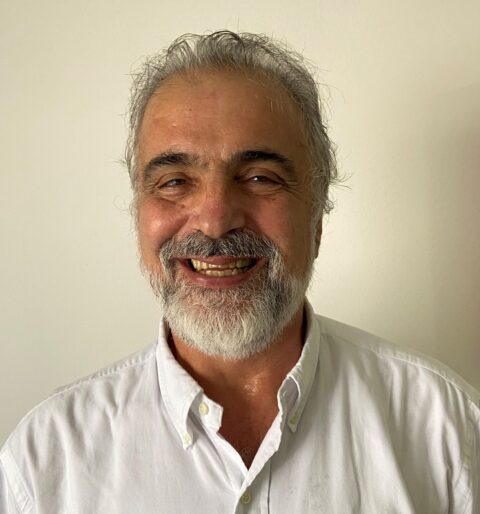
J. Albino Aguiar

Universidade Federal de Pernambuco

Leer biografía

Bolsista de Produtividade em Pesquisa do CNPq – Nível 1D

Bachelor’s at FISICA from Departamento de Física (1978), Master’s at Physic fromDepartamento de Física (1979) and Doctorate at Physic from Departamento de Física (1986).Pos-Doctoral studies at Kamerlingh Onnes Laboratorium der Rijksuniversiteit te Laieden- TheNederland (1986-1988). Has experience in Physic, focusing on Solids Structure; crystallography,acting on the following subjects: high-tc superconductivity, magnetization and transportmeasurements, superconductivity, nanostructured superconductors and vortex configuration ,vortex dynamics and pinning mechanisms in mesoscopic superconductors, magneticnanoparticles for nanomedicine diagnosis, thin films and multilayer superconductors, graphyteand graphene.

Perú

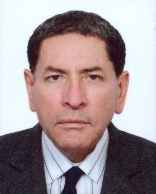
Ángel G. Bustamante Domínguez

Universidad Nacional Mayor de San Marcos

Leer biografía

Profesor Principal adscrito al Departamento Académico de Física del Estado Solido de la Facultad de Ciencias Físicas de la Universidad Nacional Mayor de San Marcos e investigador REGINA. Sus estudios de maestría, doctorado y postdoctorado las realizo en el Centro Brasileiro de Pesquisas Físicas (CBPF) de Rio de Janeiro, Brasil. También realizo pasantías de investigación en el Tokyo Institute of Technology, Japón; en el Instituto de los Materiales en Montelibreti, Roma, Italia. Su área principal en la Física es la Materia Condensada en la línea de la Superconductividad, oxidos de hierro y además cultiva trabajos multidisciplinario en arqueometría y sedimentos marinos y lacustres. Utiliza la espectroscopíaMössbauer para el estudio de los óxidos, hidróxidos, ferritas y hexaferritas en “bulk” y en nanomateriales. Su producción científica es vasta y variada con alrededor de 100 publicaciones listadas en la base de datos SCOPUS. A realizado muchas asesorías de tesis en el nivel de licenciatura, maestría y doctorado.

Brasil

Isaias Gonzaga de Oliveira

Universidade Federal Rural do Rio de Janeiro

Leer biografía

Graduated in Physics from the State University of Rio de Janeiro (1988), Master in Physics (1992) and Doctor in Physics (1996) from the Brazilian Center for Physics Research. He did postdoctoral work at the University of Manchester (1997/1998). He is currently Associate Professor at the Physics Department at the Federal Rural University of Rio de Janeiro. He has experience in the field of condensed matter physics, with an emphasis on superconductivity, magnetic properties, and phenomenological theories of superconductivity.

Colombia

David Landinez Tellez

Universidad Nacional de Colombia

Colombia

Jairo Roa Rojas

Universidad Nacional de Colombia

Leer biografía

Prof. Jairo Roa Rojas currently works at the Physics of Novel Materials Group, Department of Physics (Bogotá), National University of Colombia. J. Roa-Rojas does research in Materials Science, Solid State Physics and Condensed Matter Physics. Their current project is ‘Magnetic, spintronics, ferroelectric and multiferroic perovskite-like materials’.

México

Arturo I. Martínez Enríquez

CINVESTAV

Venezuela

José Fermín

Universidad del Zulia

Venezuela

Blanca Rojas de Gascue

Universidad del Oriente

Chile

Felipe Mondaca Espinoza

Universidad San Sebastián, Puerto Montt

Leer biografía

Assistant professor at San Sebastián University’s Faculty of Engineering in Puerto Montt, Chile. Bachelor’s and master’s at Physic from Catolica del Norte University in Chile and Doctorate at Nanoscience and Nanotechnology from Centro de Investigación y estudios Avanzados del IPN (CINVESTAV), Mexico. He has experience in the field of condensed matter physics, with an emphasis on ferromagnetic, transparent conducting, and catalytic materials for solar energy and water purification applications..

Chile

Sergio Conejeros Espindola

Universidad Católica del Norte, Antofagasta

Brasil

Mario Reis

Universidade Federal Fluminense

Leer biografía

Mario Reis is an Associate Professor at the Fluminense Federal University in Rio de Janeiro, Brazil, where he leads a research group comprised of graduate students and postdoctoral researchers. Prof. Reis received his PhD in 2003, from the Brazilian Center for Research in Physics (Rio de Janeiro) and the University of Aveiro (Portugal), focusing on both the experimental and theoretical aspects of Condensed Matter Physics. He completed his Master’s degree in 2000 at CBPF and his undergraduate degree in 1998 at UFRJ, both in Physics. In 2022, Prof. Reis stayed at Seville University, Spain, as a Distinguished Researcher; and he has also undertaken some short-term academic visits in other countries, including Portugal and Chile. Currently, his research explores quantum and classical caloric effects, molecular magnets, quantum information in magnetic materials, and nanomagnetism. Prof. Reis keeps a regular international scientific cooperation with several international universities, including countries such as Chile, EUA, Russia, China, Spain, Portugal and Brazil. Member of the Latin American Network of Condensed Matter (LAFMAT). His contributions to the field include: two books on Magnetism and over a hundred articles in peer-reviewed international journals. He developed the mobile APP Sample for Science. Additionally, he serves as the Editor-in-Chief of Physica B: Condensed Matter, an international Journal published by Elsevier.

Brasil

Augusto César Lima Moreira

Universidade Federal de Pernambuco

Leer biografía

Augusto César Lima Moreira, is an Associate Professor III of the Interdisciplinary Center for Exact and Natural Sciences at the Federal University of Pernambuco (UFPE) – Agreste Academic Center (CAA) in Pernambuco state, Brazil

His research focuses on transport in nanostructures, with an emphasis on Studies of Special Atoms and Molecules. He is a member of the Interdisciplinary Group on Molecular Modeling and Materials (GIMMM) at UFPE (Caruaru), and collaborates with the Unconventional Polymers (PNC) group at the UFPE Department of Physics (Recife), the Ceramics and Nanomaterials Laboratory (Faculty of Physical Sciences, National University of San Marcos/Peru), and the Computational Simulation of Materials Group at Continental University (Peru).

Argentina

A. D. Hernández Nieves

CONICET, Centro Atómico Bariloche, Instituto Balseiro

Leer biografía

He received his Bachelor’s degree in Physics from the University of Havana in 1997 and his Master’s degree in Physics in 1999. Subsequently, he completed his Ph.D. in Physics at the Balseiro Institute in Argentina thanks to a scholarship from the Latin American Physics Center (CLAF). He finished his doctorate in 2004. Subsequently, he carried out postdoctoral studies at the International Center for Theoretical Physics (ICTP) in Trieste, Italy and at the University of Antwerp, Belgium. Since 2009, he has been a CONICET researcher with a workplace at the Bariloche Atomic Center and since 2013 a teacher at the Balseiro Institute in Bariloche, which belongs to the National University of Cuyo. Initially, he carried out research on the formation of magnetic flux patterns in superconductors and since 2005 his main research line has been the electronic and magnetic properties of new materials using first-principles calculations using Density Functional Theory (DFT).

Argentina

Leandro Tosi

CONICET, CAB-CNEA, Instituto Balseiro

Argentina

Gabriela Grad

Universidad Nacional de Córdoba

Bolivia

Gustavo García

Universidad Mayor de San Andrés

Venezuela

Alexander Briceño

Instituto Venezolano de Investigaciones Científicas

Costa Rica

Sergio Paniagua Barrantes

LANOTEC, Centro Nacional de Alta Tecnología

Leer biografía

Sergio A. Paniagua, BS and MS in Chemistry from the University of Costa Rica, Ph.D in Chemistry from the Georgia Institute of Technology in Atlanta, USA. Graduate studies focused on the generation of ultrathin films for electro-organic devices such as light-emitting diodes and solar cells. After completing his doctorate, he worked for the Technology Development Division at Intel in Oregon, USA, as a lithographic process engineer. He is currently a professor in the Department of Natural Sciences at the University of Costa Rica Western Campus and is also the Research Coordinator at the National Nanotechnology Laboratory of CENAT/CONARE, where he researches and develops nanotechnologies applicable to perovskite solar cells, antimicrobial surfaces, and novel substrates for surface plasmon-enhanced Raman spectroscopy, among other projects making use of his knowledge in physical chemistry and materials science.

México

Alfredo Tlahuice Flores

Universidad Autónoma de Nuevo León

Leer biografía

El Dr. Alfredo Tlahuice Flores es un destacado investigador mexicano en química computacional y nanociencia molecular, reconocido internacionalmente por sus aportes en la predicción estructural de nanocúmulos metálicos protegidos y el desarrollo de algoritmos computacionales avanzados. Obtuvo el doctorado en Física por la Universidad Autónoma de Nuevo León (2008), donde se especializó en nanociencia computacional.

Ha publicado más de 47 artículos en revistas de alto impacto como Physical Chemistry Chemical Physics, Journal of Physical Chemistry y ACS Omega, acumulando 1,500 citas y un índice h de 23. Es miembro del Sistema Nacional de Investigadores Nivel 2 y fue presidente de la División de Nanociencias y Nanotecnología de la Sociedad Mexicana de Física (2018-2019).

Su trabajo se centra en el uso de la Teoría del Funcional de la Densidad (DFT) para estudiar nanocúmulos de oro tiolados, identificando bloques estructurales clave (Au₄, Au₆). En 2024 presentó un algoritmo de 5 pasos que optimiza la predicción estructural de estos sistemas, expuesto en Pennsylvania State University.

Ha sido ponente invitado en congresos de la American Chemical Society, y uno de sus artículos fue distinguido como “Hottest Article” de PCCP (2019). Dirige tesis de posgrado y organiza seminarios internacionales de nanociencia con amplia participación iberoamericana.

Bolivia

Edgar Cárdenas

Universidad Mayor de San Andrés

Costa Rica

Tomás Rojas Solórzano

Universidad de Costa Rica

Ecuador

Juan Ramón Primera Ferrer

Universidad Técnica de Manabí

El Salvador

Carlos Rudamas

Universidad de El Salvador

Guatemala

Lucía Nitsch Velásquez

Universidad de San Carlos de Guatemala

Colaboradores

Colombia

Ximena Velásquez

Universidad Nacional de Colombia

Colombia

Vanessa Parra

Universidad Nacional de Colombia

Perú

James Godoy Chepe

Universidad Nacional Mayor de San Marcos

Perú

Rodolfo Ccolque Rojas

Universidad Nacional Mayor de San Marcos